
Ship's hull & structures
Hull, cargo and water-ballast tank inspection for vessels and floating assets, combining access and aerial methods to survey internal structure and external hull, all carried out to class specification.
Survey-ready, with less downtime
Hull and tank surveys are demanding, time-critical and tightly governed by class. We combine certified rope access, confined-space entry, drones and NDT to cover the full vessel, internal tank structure, framing and the external hull above and below the waterline, and to do it with less staging, fewer entries and a shorter time alongside.
Every inspection is planned and reported to satisfy the relevant class and surveyor requirements, so the survey stands up to scrutiny first time.
 Cargo tank
Inside the tanks, in detail
Cargo and water-ballast tanks are where structural condition is won or lost. Coating breakdown, pitting, grooving and fractured internals are found and graded against class requirements.
- Cargo & product tanks, internal structure, bulkheads and stiffeners
- Water-ballast tanks, close-up survey of frames, brackets and welds
- Coating & corrosion, breakdown, pitting and grooving graded to class
- UT thickness gauging, wall-loss readings where class requires them
The whole vessel, inside and out
Access and aerial methods combined to cover structure that would otherwise need extensive staging or dry-docking.
Cargo tank inspection
Internal examination of cargo and product tank structure, coatings and welds, condition graded against the survey scope and class requirement.
Water ballast tank inspection
Close-up survey of ballast tank internals, frames, brackets, longitudinals and welds, the areas most exposed to corrosion and structural fatigue.
External hull inspection
Hull plating, welds and appendages inspected above and below the waterline using drones, rope access and ROV, reducing staging and dive time.
Internal structure & framing
Bulkheads, girders, floors and framing examined for deformation, fracture and wastage, building a clear picture of the vessel's structural condition.
Coating condition & breakdown
Protective-coating assessment with dry-film thickness measurement, identifying breakdown before it becomes structural loss.
Close-up survey to class
Hands-on close-up survey of critical structural areas to the classification society's requirement, documented to support the vessel's class status.
More coverage, less downtime
By using internal drones and placing rope access teams exactly where the surveyor needs eyes, we reduce staging, reduce access time and help minimise the time a vessel spends out of service without compromising the depth of the survey.
- Internal drone flights inside tank structures to assist class and survey requirements
- Rope access reaches structures that require close visual inspection without full staging
- Class-ready reporting package for the attending surveyor
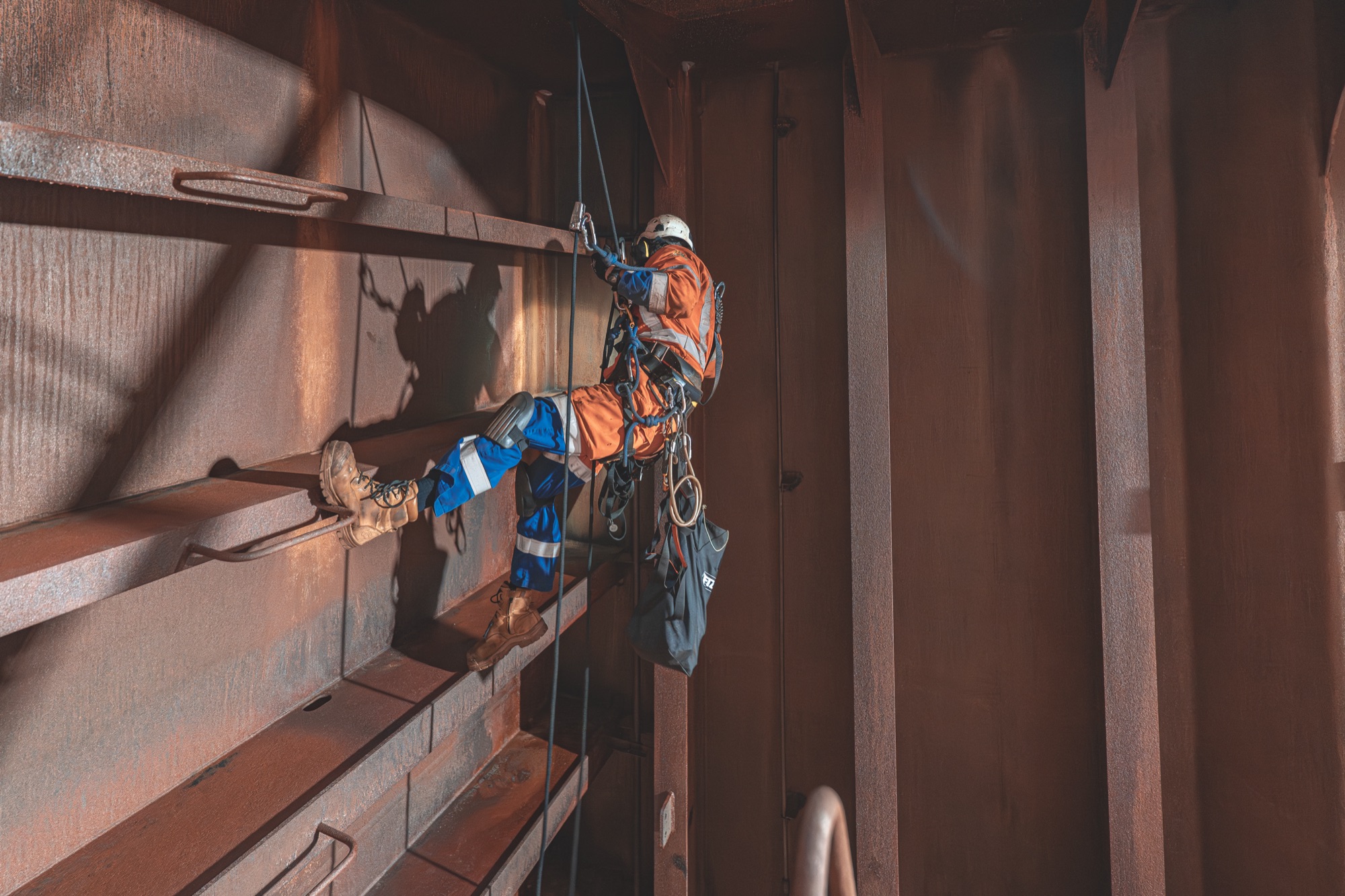 Close visual inspections on internal tank structures
Combined methods, one survey
Tank and hull surveys using combined drone, rope access and NDT methods.
Every method the survey needs
Plan a hull or tank survey
Tell us about the vessel, the class requirement and the window. We'll come back with a methodology, mobilisation plan and indicative timeline.